
Create Material Create Material

Why Choose Galvanized Coils for Global Projects?

Time:2026-09-20 Author:Liam
0%

Why Choose Galvanized Coils for Global Projects?

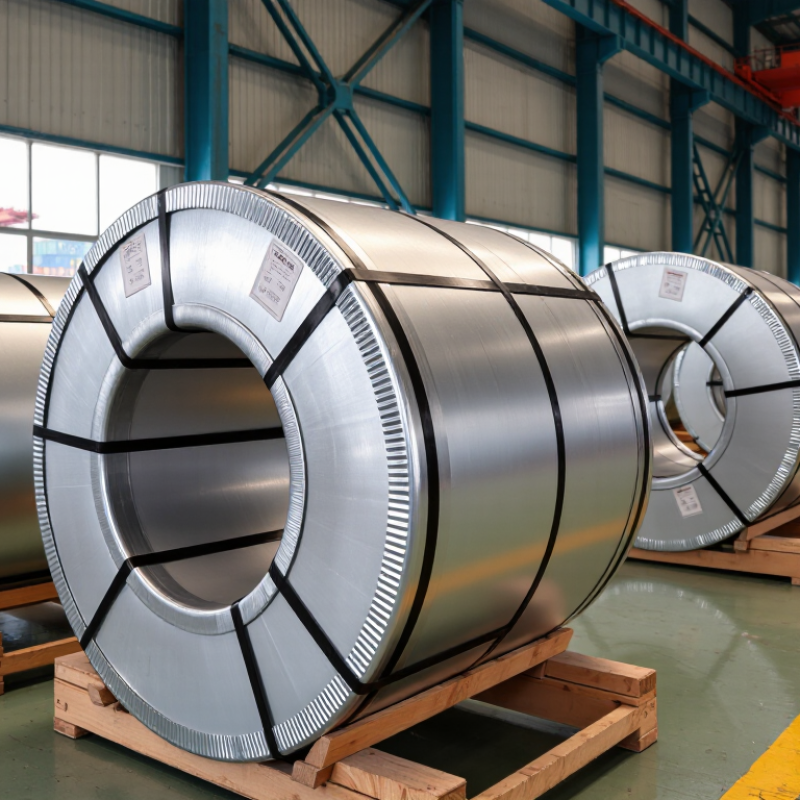
Global projects face more than transport and installation challenges. They must withstand humid ports, industrial dust, coastal salt, temperature changes, and uncertain maintenance schedules. Galvanized Coils offer a practical response because their zinc coating protects steel from corrosion before the material reaches the construction site.

Frank Altmayer, a recognized corrosion specialist and galvanizing industry educator, explains, “Zinc protects steel through both barrier protection and cathodic protection.” This principle matters in real projects. If a small scratch exposes the steel, nearby zinc can sacrifice itself and reduce corrosion at the damaged area. The coating is not simply decorative. It is an active protection system.

Galvanized Coils also support consistent manufacturing. Their surfaces can be formed, cut, and integrated into roofing, wall systems, cable trays, automotive parts, and structural components. A coil arriving with stable coating thickness can reduce rework and simplify quality inspections. That sounds straightforward. It is not always perfect.

Coating performance depends on zinc mass, steel chemistry, forming conditions, storage, and the surrounding environment. Poor ventilation during storage may create wet-storage stains. Incorrect handling can still damage the surface. Engineers must check specifications rather than assume every galvanized product performs equally.

For international procurement teams, this balance is important. Galvanized Coils can reduce repainting needs, extend service life, and make maintenance planning more predictable. They may also lower lifecycle costs, although the result depends on design and exposure conditions. A reliable decision requires test certificates, coating data, dimensional tolerances, and supplier experience. Small details matter globally.
Why Choose Galvanized Coils for Global Projects?

What Are Galvanized Coils and How Are They Made?

Why Choose Galvanized Coils for Global Projects?

What Are Galvanized Coils and How Are They Made?

Galvanized coils are flat steel strips protected with a zinc layer. Most are produced through continuous hot-dip galvanizing. The steel is cleaned, heated, and passed through molten zinc at about 450°C. Air knives then control the coating thickness. The finished strip is cooled, inspected, and recoiled for transport or fabrication.

The International Zinc Association reports that galvanizing uses roughly 60% of global zinc consumption. This reflects zinc’s practical value in corrosion protection. The coating shields steel in two ways. It forms a barrier, then provides sacrificial protection when scratches expose the surface. According to the World Steel Association, global crude steel production reached about 1.88 billion tonnes in 2023. Even a small coating improvement can affect enormous material volumes.

In field applications, galvanized coils support roofing, HVAC ducts, wall panels, and structural components. Coating weight, yield strength, surface finish, and coil width must match the project environment. ISO 5002 and ASTM A653 provide useful references for continuous galvanized sheet requirements. Yet no coating is perfect. Poor storage can create white rust, especially when wet coils are tightly packed. That detail is often underestimated.

Tips: Keep coils dry, ventilated, and separated from standing water. Confirm coating mass before production. Ask for mill certificates and independent inspection records. A cheaper coil may create higher cutting, repainting, and replacement costs later.

How the Zinc Coating Protects Steel from Corrosion

Why Choose Galvanized Coils for Global Projects?

How the Zinc Coating Protects Steel from Corrosion

Galvanized coils use a metallurgically bonded zinc layer to defend steel against moisture, oxygen, and salts. Zinc corrodes preferentially, protecting exposed steel even when minor scratches appear. This practical behavior matters in bridges, warehouses, solar structures, and transport equipment. The 2016 NACE IMPACT study estimated global corrosion costs at 3.4% of worldwide GDP, or about 2.5 trillion US dollars. Better surface protection can reduce maintenance pressure, although it cannot correct poor design.

Industry durability data from the American Galvanizers Association indicates that hot-dip galvanized steel can remain serviceable for more than 50 years in many rural and suburban environments. Industrial or coastal exposure may shorten that period. Coating thickness, drainage, salt deposits, and cutting practices all influence performance. A zinc surface is not magic. Trapped water can still create hidden corrosion, and incompatible fasteners may cause galvanic problems. These details are often underestimated during global procurement.

Tips: Check the required zinc coating mass before ordering. Match it with the project’s humidity, salt, and pollution levels. Keep cut edges drained and sealed where appropriate. Request coating test records, dimensional checks, and traceable inspection data. Reflect on one uncomfortable point: choosing a thicker coating may cost more initially, but repeated repainting can create greater carbon, labor, and access burdens over time. Use local exposure data, not assumptions.

Why Galvanized Coils Suit Diverse Global Construction Needs

Why Choose Galvanized Coils for Global Projects?

Why Galvanized Coils Suit Diverse Global Construction Needs

Galvanized coils serve projects across humid coastlines, dry interiors, and cold industrial zones. Their zinc coating helps protect steel from moisture and ordinary atmospheric corrosion. This protection supports roofing panels, wall cladding, ductwork, and structural components. That matters.

During practical fabrication, coil quality affects bending, cutting, and forming results. Consistent coating thickness can reduce early rust risks around exposed surfaces. Clear material certificates also help engineers verify thickness, grade, coating mass, and mechanical performance. Small details decide.

Global construction teams face different shipping distances, storage conditions, and installation schedules. Galvanized coils can arrive as a flexible raw material for local processing. This reduces dependence on transporting many finished shapes across borders.

However, storage still requires care. Stacked coils need ventilation, dry floors, and protection from trapped water.

Climate alone should not determine material selection. Designers must consider salt exposure, industrial pollutants, temperature changes, and expected service life. Local standards may also specify coating classes, tolerances, or testing methods. A suitable specification should reflect the actual environment, not a generic project template.

Galvanized steel is useful, but it is not universal. Severe chemical exposure may require another protective system or additional treatment. Cut edges, scratches, and poor drainage can weaken long-term performance. Reviewing these weaknesses before production is more reliable than correcting them after installation. There is no perfect coil, only a better-matched one.

Key Factors for Selecting Coils for Different Project Conditions

Why Choose Galvanized Coils for Global Projects?

Coil selection should begin with exposure, not price. Coastal sites face chlorides, while inland factories may mainly experience humidity and condensation. ISO 9223 classifies atmospheric corrosivity using humidity, salinity, and pollution. That classification helps engineers choose coating mass more responsibly. A thicker zinc layer is not always better. That assumption needs testing.

For moderate conditions, a Z275 coating provides 275 g/m² of zinc across both surfaces under common specifications. It offers practical protection for roofing, framing, and equipment housings. Heavier coatings may suit marine air or frequent wetting, but forming performance can change.

Tight bends may crack brittle surface layers. Engineers should confirm minimum inside radius, substrate grade, yield strength, and weld requirements before ordering. Standards such as EN 10346 and ASTM A653 help define these properties.

Corrosion remains a costly design risk. The IMPACT study by NACE estimated global corrosion costs at about 3.4% of worldwide gross domestic product, or roughly $2.5 trillion annually. Galvanized coils can reduce maintenance exposure when coating, edge protection, and drainage are correctly specified.

Logistics also matter. Coils need dry storage, ventilation, and protection from trapped moisture during sea transport. In project reviews, small details often decide performance. A suitable coil may still fail when cut edges remain unsealed or water sits beneath stacked sheets. Temperature, forming speed, surface treatment, and local building codes deserve equal attention.

How Standards, Logistics, and Sustainability Affect Global Use

Why Choose Galvanized Coils for Global Projects?

How Standards, Logistics, and Sustainability Affect Global Use

Galvanized coils support global projects because their performance can be specified before shipment. The hard part is alignment. For continuously hot-dip coated sheet, buyers often compare EN 10346, ASTM A653/A653M, and local equivalents. These standards define coating mass, steel grade, tolerances, and testing routes. A purchase order should state the exact standard, coating designation, coil width, inner diameter, heat number, and certificate requirements. “Galvanized” alone is too vague. That omission can create costly disputes at fabrication sites.

UNCTAD’s Review of Maritime Transport 2024 reports that ships carry over 80% of world trade by volume. Coils therefore need more than a good mill certificate. Moisture-resistant wrapping, secure saddles, edge protection, and port-specific handling reduce transit damage. In humid containers, trapped water can form white rust before the coil reaches the jobsite. A practical logistics plan checks sailing time, transshipment, storage ventilation, and inland lifting equipment. This is practical, not glamorous.

The World Steel Association states that steelmaking contributes roughly 7–9% of global carbon dioxide emissions. Galvanizing can extend service life, reducing repainting and replacement, but results depend on exposure, coating mass, and maintenance. Environmental claims should use an environmental product declaration, recycled-content data, and product-specific carbon information. ISO 14025 provides principles for such declarations. I would also question whether a thicker coating is always better. It may improve durability, yet add material, weight, and cost without matching site conditions. That trade-off deserves calculation.

Why Choose Galvanized Coils for Global Projects? - How Standards, Logistics, and Sustainability Affect Global Use

Project Dimension Measurable Data or Standard What It Means for Global Projects Specification or Procurement Check
International product standards ASTM A653/A653M, EN 10346, and JIS G3302 are widely used reference standards for continuously hot-dip coated steel sheet and coil. Using an accepted standard creates a common technical language between designers, mills, fabricators, inspectors, and import authorities. State the required standard and edition in the purchase specification; do not rely only on the term “galvanized coil.”
Zinc coating designation Under EN 10346, coating classes such as Z100, Z275, Z350, Z450, and Z600 indicate nominal coating mass in g/m² for both surfaces combined. A higher coating mass generally provides a larger zinc reserve, which can improve atmospheric corrosion protection when the exposure conditions justify it. Specify the coating class, whether the value is total for both sides, and any required minimum coating mass or testing method.
ASTM coating reference ASTM A653 coating designations include G60 and G90; G90 corresponds to 0.90 oz/ft² total coating mass, approximately 305 g/m² for both sides. Equivalent-looking designations may use different units or test conventions, so direct numerical comparison is important. Confirm equivalence between ASTM, EN, and local specifications before approving substitutions.
Steel grade and forming Common product categories include structural grades, commercial-quality grades, and forming or deep-drawing grades. The correct steel grade affects bending performance, fabrication risk, dimensional stability, and final service life. Define yield strength, tensile strength, elongation, thickness tolerance, and forming requirements—not just zinc coating mass.
Corrosion environment Corrosion exposure varies with humidity, chloride deposits, industrial pollutants, temperature, and time of wetness. A coating selected for a dry inland application may be inadequate for coastal, marine, de-icing salt, or industrial environments. Match coating mass and any additional paint or powder-coat system to the project exposure classification and design life.
Coil dimensions Width, thickness, internal diameter, external diameter, and coil mass are all required to verify mill and processing compatibility. Incorrect dimensions can cause slitting, roll-forming, decoiling, storage, or transport problems even when the steel chemistry is compliant. Include dimensional tolerances, coil weight limits, packaging requirements, and equipment limits in the order.
Surface finish Typical surface requirements may include regular spangle, minimized spangle, skin-passed surface, or a defined roughness range. Surface appearance and roughness influence painting, coating adhesion, forming marks, and architectural acceptance. Specify surface quality, treatment such as passivation or oiling, and acceptable visual limits using approved samples where needed.
International logistics Ocean transport commonly uses containerized or breakbulk shipment, depending on coil mass, dimensions, port equipment, and route restrictions. Coil weight and packaging design affect freight cost, loading safety, port handling, and the risk of deformation during transit. Confirm Incoterms, allowable coil weight, lifting method, moisture protection, securing arrangement, and destination-port handling capability.
Moisture and storage risk Galvanized coils can develop wet storage stain when moisture is trapped between tightly packed surfaces without adequate ventilation. Sea transit, condensation, temperature changes, and outdoor storage can damage appearance even when the zinc coating remains present. Use suitable wrapping and ventilation, keep coils off the ground, prevent direct weather exposure, and follow a first-in-first-out storage policy.
Traceability and quality control A complete quality package normally includes the heat or coil number, chemical analysis, mechanical results, dimensions, coating results, and inspection records. Traceability supports customs clearance, project approval, nonconformance investigation, and verification of material conformity. Require material certificates, inspection plans, sampling rules, marking details, and independent inspection where project risk warrants it.
Zinc and steel recyclability Steel is recyclable, and zinc can also be recovered and recycled through established metal-recycling processes. Galvanized steel can support circular-material strategies when components are collected and processed through appropriate recycling channels. Request recycled-content or end-of-life information only when it is supported by a recognized declaration or verified project documentation.
Service-life strategy The useful life of galvanized steel depends on coating mass, environmental corrosivity, design details, drainage, cut edges, and maintenance. Material selection and structural detailing work together; eliminating water traps can be as important as increasing coating thickness. Specify drainage, ventilation, edge treatment, compatible fasteners, repair procedures, and inspection intervals in the design documents.
Total project cost The delivered cost includes base steel price, zinc coating, processing, packaging, inland transport, ocean freight, insurance, duties, inspection, and storage. A lower purchase price may not produce the lowest installed cost if it increases corrosion risk, rework, delays, or logistics complexity. Compare suppliers using a delivered-and-compliant cost model rather than material price alone.

Technical references: ASTM A653/A653M, EN 10346, JIS G3302, and generally accepted galvanized-steel handling and corrosion-control practices. Project-specific requirements should always be confirmed against the governing contract, local regulations, and applicable standard edition.

FAQS

What are galvanized coils?

Galvanized coils are flat steel strips covered with a protective zinc layer. The coating helps resist moisture, oxygen, and salts. They are commonly shaped into roofing, ducts, panels, and structural parts.

How are galvanized coils made?

Steel is cleaned, heated, and passed through molten zinc at about 450°C. Air knives control coating thickness. The strip is then cooled, inspected, and recoiled.

How does zinc protect the steel?

Zinc creates a barrier against moisture and oxygen. It also corrodes before exposed steel when minor scratches occur. This sacrificial protection is useful in demanding outdoor environments.

Where are galvanized coils commonly used?

They support roofing, HVAC ducts, wall panels, bridges, warehouses, and solar structures. Selection depends on exposure conditions and required strength. Coastal projects need closer attention.

Can galvanized coils resist corrosion permanently?

No coating lasts forever. Rural environments may provide long service, while coastal or industrial areas can shorten coating life. Trapped water remains a serious weakness.

What specifications should buyers check?

Confirm coating mass, yield strength, coil width, surface finish, and dimensional accuracy. Request mill certificates and traceable inspection records. Do not judge quality by appearance alone.

How should galvanized coils be stored?

Keep coils dry, ventilated, and separated from standing water. Avoid tightly packing wet coils. Otherwise, white rust may appear between contacting surfaces.

Is a thicker zinc coating always the better choice?

Not necessarily. A thicker coating costs more initially but may reduce repainting and replacement work. The best choice depends on humidity, salt, pollution, and drainage.

What mistakes can increase project costs?

Choosing cheap material can create extra cutting, repainting, and replacement costs. Poor drainage may cause hidden corrosion. That assumption can fail.

How should global projects evaluate coating performance?

Use local exposure data instead of general assumptions. Consider humidity, salt, pollution, cutting methods, and fastener compatibility. The coating is helpful, not magical.

Conclusion

Galvanized Coils are steel coils protected by a carefully applied zinc coating, typically through a hot-dip galvanizing process. During production, the steel is cleaned, immersed in molten zinc, and cooled to form a durable protective layer. This coating shields the steel from moisture, oxygen, and other corrosive elements by creating a barrier and providing sacrificial protection when minor surface damage occurs. As a result, galvanized steel offers improved service life and reduced maintenance compared with uncoated steel.

Their strength, versatility, and reliable corrosion resistance make Galvanized Coils suitable for construction, roofing, infrastructure, automotive components, and other projects in varied climates. Selection should consider coating thickness, steel grade, forming requirements, humidity, temperature, exposure to chemicals, and expected load conditions. For international projects, consistent quality standards, appropriate packaging, efficient transportation, and dependable documentation are also important. Recyclability, long-term durability, and reduced replacement needs further support galvanized steel as a practical and more sustainable material choice.

Liam

Liam

Liam is a dedicated marketing professional with a profound expertise in the industry, where he excels at highlighting the unique advantages of our core products. With a keen understanding of market trends and consumer needs, Liam frequently updates our company’s professional blog, providing......