 Create Material
Create Material
Create Material
Choosing the right Cold Rolled Coils supplier can shape production quality, delivery stability, and total purchasing cost. Global buyers need more than a long supplier list. They need evidence.
Lakshmi Mittal once said, “Steel is the backbone of our modern society.” That perspective remains practical today. Cold rolled steel appears in automotive panels, appliances, electrical cabinets, furniture, and precision components. However, supplier performance can vary sharply. One mill may offer a bright, smooth surface, while another may deliver coils with inconsistent edges or waviness. Small differences become expensive during stamping, slitting, and forming.
This guide examines leading Cold Rolled Coils suppliers through measurable factors. These include product standards, thickness tolerance, width accuracy, surface finish, coil weight, packaging, and export experience. It also considers mill certificates, inspection procedures, production capacity, and traceability. Reliable suppliers should explain whether products meet ASTM, EN, JIS, or other requested specifications. They should also provide realistic lead times, not attractive promises that later collapse.
Price still matters. It should not stand alone. A lower quotation may hide higher rejection rates, inland transport costs, or weak after-sales support. Buyers should request sample certificates and clarify coating, oiling, edge condition, and minimum order quantity. Direct experience helps, but it can mislead when markets change. No ranking is perfect. Supplier availability, freight routes, and regional demand can shift quickly. Therefore, this comparison offers a practical starting point, not a final purchasing decision. Perform independent verification before signing a contract.
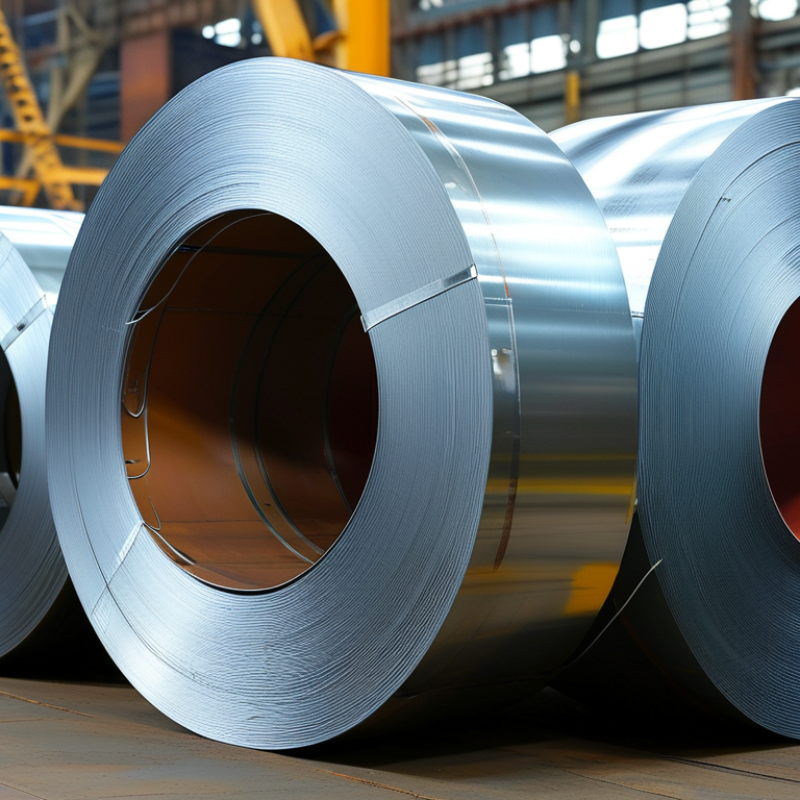
Cold rolled coils are steel sheets reduced at room temperature after hot rolling and pickling. The process creates tighter thickness control, smoother surfaces, and better forming performance. Annealing restores ductility, while skin passing improves flatness and appearance. These details matter when a coil becomes a refrigerator panel, automotive component, electrical cabinet, or precision tube.
Global buyers need cold rolled coils because manufacturing lines cannot absorb unstable dimensions easily. A difference of 0.05 millimetres may affect stamping, bending, or welding. Buyers should verify thickness tolerance, width, yield strength, surface grade, coil weight, inner diameter, and packaging. Mill test certificates are essential, but paperwork alone is not enough. I would also request samples and inspect edge quality before placing a large order.
Scale explains the demand. The World Steel Association reported 1,892.6 million tonnes of crude steel production in 2023, in World Steel in Figures 2024. That figure does not represent cold rolled coil output, but it shows the enormous industrial base behind global steel supply. The OECD’s Steel Market Developments reports also continue to highlight pressure from excess capacity and changing trade flows. Therefore, buyers should assess consistency, not only price. A bright surface can still conceal poor flatness. Small mistakes become expensive after slitting.
Global buyer reference table for evaluating cold rolled coil specifications, standards, quality requirements, and logistics suitability.
| Evaluation Dimension | Typical Cold Rolled Coil Data | Common Buyer Requirements | Why It Matters in Supplier Selection | Applicable Reference |
|---|---|---|---|---|
| Product Definition | Flat steel strip produced by rolling hot rolled steel below its recrystallization temperature, normally followed by annealing and skin-pass processing. | Confirm whether the material is fully processed cold rolled steel rather than hot rolled pickled and oiled steel. | Cold rolling provides tighter thickness control, improved surface quality, and better dimensional accuracy. | EN 10130; ASTM A1008/A1008M |
| Typical Thickness | Approximately 0.20–3.00 mm for general commercial supply. | 0.30–1.20 mmTolerance required | Thickness capability affects stamping performance, weight calculation, forming behavior, and final product cost. | EN 10131; ASTM A568/A568M |
| Typical Width | Commonly 600–2,000 mm; exact availability depends on the mill and slitting plan. | Specify full-width coil, slit coil, or cut-to-length sheet. | Width compatibility reduces material waste and avoids additional slitting or reprocessing charges. | EN 10131; ASTM A568/A568M |
| Commercial Grades | Commercial quality, drawing quality, and deep-drawing quality are widely used categories. | CQDQDDQ | Grade selection must match the forming severity of the application; deep-drawing parts require higher ductility. | ASTM A1008/A1008M; EN 10130 |
| Common European Grades | DC01, DC03, DC04, and DC05 are commonly specified for general forming and deep-drawing applications. | Use DC01 for general forming; select higher-grade material for more demanding drawing operations. | European grade designations provide a recognized basis for chemical and mechanical property control. | EN 10130 |
| Common ASTM Categories | Commercial steel, drawing steel, deep-drawing steel, and extra-deep-drawing steel categories are available. | Define the ASTM grade, temper, surface finish, and dimensional tolerances in the purchase order. | ASTM designations help align material performance with North American manufacturing requirements. | ASTM A1008/A1008M |
| Surface Finish | Bright, matte, or dull finishes may be supplied depending on rolling, annealing, and skin-pass conditions. | BrightMatteDull | Surface appearance and roughness influence painting, plating, appliance panels, and visible automotive components. | EN 10130; ASTM A1008/A1008M |
| Surface Quality | Surface quality is commonly classified according to the permissible level of minor imperfections. | Specify exposed-surface requirements, inspection criteria, and acceptable surface defects. | Clear quality definitions reduce disputes over scratches, pits, roll marks, stains, and edge defects. | EN 10130 |
| Mechanical Properties | Typical requirements include yield strength, tensile strength, and elongation; values vary by grade and temper. | Request a mill test certificate with heat number, chemical composition, and mechanical test results. | Mechanical data verifies whether the coil can withstand bending, stamping, flanging, or drawing operations. | EN 10130; ASTM A1008/A1008M |
| Dimensional Tolerances | Thickness, width, flatness, camber, and edge condition are normally controlled according to a defined tolerance class. | Specify normal or special tolerances and identify the governing standard. | Tighter tolerances improve assembly accuracy but may increase production and inspection costs. | EN 10131; ASTM A568/A568M |
| Coil Weight | Mill coils may weigh several tonnes; export coils are often adjusted to container, vessel, or line-handling limits. | Confirm minimum and maximum coil weight, inner diameter, outer diameter, and eye orientation. | Coil weight must match the buyer’s decoiler, crane, warehouse, and transport capabilities. | Buyer’s equipment and packaging specification |
| Packaging | Export packaging commonly includes waterproof paper, steel or plastic strapping, edge protection, and corrosion protection. | Eye-to-sideEye-to-skySeaworthy | Correct packaging prevents moisture damage, telescoping, edge impact, and corrosion during ocean transport. | Purchase contract; Incoterms® 2020 |
| Corrosion Protection | Cold rolled coil may be supplied oiled, dry, or with a temporary corrosion-protection treatment, depending on the application. | State oil type, oiling level, storage period, and whether subsequent painting or coating is required. | Protection requirements depend on transit duration, humidity, storage conditions, and downstream processing. | Buyer’s technical specification |
| Typical Applications | Automotive panels, appliances, furniture, electrical cabinets, lighting components, drums, tubes, and general fabrication. | Match grade and surface quality to forming, painting, plating, or visible-surface requirements. | Application-based purchasing prevents over-specification and reduces rejection risk. | Industry practice; applicable product standard |
| Quality Documentation | Typical documents include mill test certificate, packing list, commercial invoice, certificate of origin, and inspection report when required. | Require traceability from coil number and heat number to test results and shipping documents. | Complete documentation supports customs clearance, audits, claims management, and regulatory compliance. | Contract terms; destination-country requirements |
| HS Classification Reference | Cold rolled flat-rolled iron or non-alloy steel products with a width of 600 mm or more and thickness below 3 mm are generally associated with HS heading 7209; narrower products are generally associated with HS heading 7211. | Verify the final code with the importing country’s customs authority or customs broker. | Correct classification affects tariffs, trade remedies, reporting, and customs clearance. | Harmonized System headings 7209 and 7211 |
| Supplier Comparison Criteria | Assess standard compliance, production capacity, dimensional capability, quality consistency, export experience, lead time, packaging, and after-sales response. | Use a documented technical and commercial scoring system before placing a bulk order. | A structured comparison helps global buyers identify suppliers that can deliver consistent quality rather than only competitive pricing. | Buyer qualification procedure |
Compare specifications, freight, insurance, duties, port charges, financing, and inland delivery. A cheap offer may become expensive after arrival.
Check thickness tolerance, width range, surface finish, oiling, yield strength, edge condition, and coil weight. Small details matter.
Request recent mill test certificates and inspection records. Match each certificate’s heat number with the marking on the actual coil.
Review rolling equipment, storage areas, packaging, loading procedures, and document controls. Look for roof leaks, standing water, and damaged wrapping.
Ask for production schedules, minimum quantities, realistic lead times, and recent shipment evidence. A confident promise is not proof.
Samples help reveal surface marks, rust, oil coverage, and edge problems. This matters when appearance affects fabrication or painting.
Confirm export documents, packing standards, insurance responsibility, delivery terms, and payment timing. Put every important detail in writing.
Track rejection rates, delivery accuracy, certificate quality, and response time. Keep photos and retained samples for every shipment.
Repeated communication delays, changing hardness, poor surface quality, or weak corrective actions deserve attention. One safe shipment proves little.
No. Trade data shows movement, not consistent quality, service, or claim handling. I might overvalue spreadsheets sometimes. Physical evidence still matters.
Cold Rolled Coils are precision-manufactured steel products valued for their smooth surface, accurate dimensions, consistent thickness, and strong formability. Global buyers use them in automotive parts, appliances, construction components, furniture, and industrial equipment, where appearance, performance, and dependable processing are essential. Choosing the right supplier requires more than comparing prices; buyers should evaluate production capacity, material consistency, delivery reliability, technical support, packaging, and communication across international markets.
A dependable supplier should provide clear product specifications, traceable quality records, and certifications relevant to the buyer’s industry and destination market. Important factors include steel grade, surface finish, dimensional tolerance, mechanical properties, testing procedures, and compliance with recognized quality standards. Buyers can compare suppliers by requesting samples, reviewing inspection reports, confirming lead times, assessing logistics capabilities, and clarifying warranty and after-sales policies. A structured evaluation process, combined with regular performance monitoring and open communication, helps global buyers build a stable supply relationship and select Cold Rolled Coils that meet both technical requirements and long-term business goals.
