
Create Material
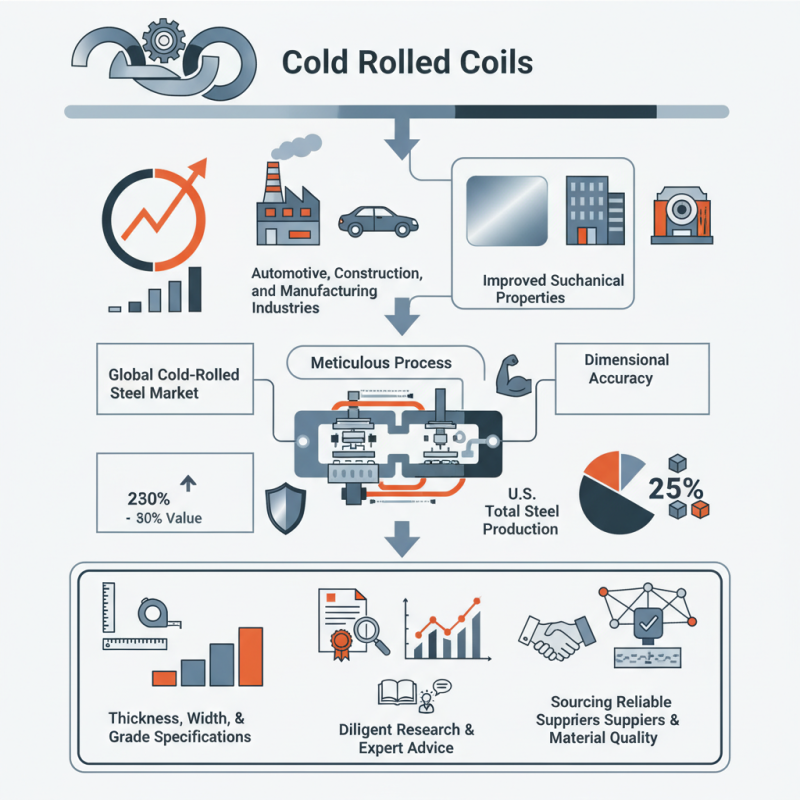
Cold Rolled Coils are essential materials used in various industries, including automotive, construction, and manufacturing. According to a report by Grand View Research, the global cold-rolled steel market was valued at approximately USD 350 billion in 2020 and is expected to grow steadily. This growth highlights the increasing demand for high-quality, durable materials.
These coils undergo a meticulous process that improves surface finish and dimensional accuracy. As a result, they offer superior mechanical properties compared to hot-rolled steel. In fact, data from the American Iron and Steel Institute indicates that cold-rolled products account for over 25% of the total steel produced in the U.S. This emphasizes the industry's reliance on Cold Rolled Coils for various applications.
When purchasing Cold Rolled Coils, it is critical to consider factors such as thickness, width, and grade specifications. Understanding certification requirements and market trends can greatly influence the buying process. Buyers often face challenges in sourcing reliable suppliers and ensuring material quality. Addressing these issues requires diligent research and authentic advice from industry experts.
Cold rolled coils are essential materials widely used in various industries. These steel products undergo a specific manufacturing process. The process begins with the hot-rolling of steel slabs. After cooling, the slabs are rolled at room temperature. This method enhances the steel's properties, giving it a smoother surface and tighter tolerances.
In many ways, cold rolled coils are versatile. They find applications in automotive, construction, and appliance sectors. Their properties include improved strength and surface finish. However, selecting the right specifications can be tricky. Different thicknesses and grades impact performance. Buyers should consider their specific requirements carefully. Small errors in selection can lead to significant issues later. Understanding these nuances is crucial for successful projects.
Purchasing cold rolled coils requires a sound understanding of the product. Researching suppliers is vital—look for reliability and experience. Don't hesitate to ask questions about the coils' properties and available grades. It may seem daunting, but informed choices lead to better outcomes. Ensure that your supplier provides documentation and quality certifications. This verification adds to the reliability of your purchase.
Cold rolled coils are produced through a precise process that enhances the properties of the steel. Initially, hot rolled steel is passed through a series of rollers at room temperature. This technique not only refines the thickness but also improves the surface finish. According to industry data, the global cold-rolled steel market is projected to grow at a CAGR of 4% from 2021 to 2028, indicating strong demand.
As the metal moves through the rollers, specific conditions are applied. The temperature, pressure, and speed are crucial. Deviating from these parameters can result in defects. Research emphasizes the importance of maintaining consistent quality during production. Variations can lead to weak spots, affecting the performance of the end product.
Furthermore, the finishing stages are vital. Products may undergo additional treatments such as annealing or coating. These enhance durability and corrosion resistance. Yet, not all batches meet the desired standards. Industry analysts often note that quality control issues arise. Addressing these shortcomings is essential for manufacturers to retain client trust. Balancing efficiency with quality remains a critical challenge in the cold rolled coils market.
Cold rolled coils are widely used in various industries due to their excellent surface finish and tight tolerances. When considering their specifications, understanding the key standards is crucial for buyers. Cold rolled steel typically adheres to ASTM, ISO, and JIS standards. These standards define the chemical composition, mechanical properties, and dimensional tolerances of the steel. Adhering to these guidelines ensures quality and consistency in the final products.
Thickness is a vital specification to consider. Cold rolled coils are available in thicknesses ranging from 0.5 mm to 3.0 mm. Buyers should assess their project needs to select the right variety. Widths can vary, with common sizes including 600 mm, 1000 mm, and 1250 mm. It's essential to confirm the dimensions intended for specific applications. Additionally, surface treatment plays a role. Buyers must decide if a matte or polished finish is preferable for their end-use.
When purchasing cold rolled coils, sourcing from reliable suppliers is important. Vendors should provide certifications that affirm compliance with the necessary standards. Inquiring about samples before placing larger orders is a wise strategy. This allows for a closer inspection of quality. Buyers could find themselves unsure at times, particularly with the range of options available. Therefore, having a clear understanding of specifications can prevent potential issues down the line.
Cold rolled coils (CRC) are a vital product in various industries, notably automotive and construction. Understanding the factors influencing their prices can significantly impact purchasing decisions. Key factors include raw material costs, production methods, and market demand.
Current estimates show that steel prices fluctuate based on iron ore prices. For instance, a 2022 report indicated that iron ore prices ranged from $120 to $150 per ton. These variations often correlate to global production changes and geopolitical factors. The demand in regions like Asia further drives CRC prices. As per industry analyses, a 10% increase in demand can push coil prices up by 5-7%.
Tips: When purchasing cold rolled coils, always compare different suppliers. Consider the quality standards they follow. Look into their production certifications.
Another critical aspect is energy costs, which affect CRC production. A 2023 study highlighted that energy costs represent nearly 30% of total manufacturing expenses. Rising energy prices due to environmental regulations can lead to increased coil prices.
Tips: Keep an eye on energy market trends. They can give a hint about future price changes. Understanding these dynamics can help buyers make informed choices.
| Dimension | Thickness (mm) | Width (mm) | Length (mm) | Price ($/ton) | Supplier Rating |
|---|---|---|---|---|---|
| Standard Cold Rolled Coil | 0.5 | 1000 | 2000 | 800 | 4.5 |
| High-Strength Cold Rolled Coil | 1.0 | 1200 | 2500 | 850 | 4.8 |
| Electrogalvanized Cold Rolled Coil | 0.75 | 1500 | 3000 | 900 | 4.9 |
| Stainless Cold Rolled Coil | 1.5 | 600 | 1500 | 1200 | 4.7 |
| Cold Rolled High Carbon Coil | 2.0 | 800 | 1800 | 950 | 4.6 |
When considering the purchase of cold rolled coils, preparation is key. Start by researching suppliers. Look for companies with a solid reputation in the industry. Online reviews and testimonials can provide insights. You want to ensure they prioritize quality and customer service. Check if they have been in the business for a while. Longevity often indicates reliability.
Next, assess your specific needs. Determine the thickness, width, and grade of coil required for your project. Be clear about your expected delivery time as well. Different suppliers may have varied lead times. Contact multiple suppliers for quotes. Comparing prices is essential, but don’t let it overshadow quality. Cheaper doesn’t always mean better. Be cautious of deals that seem too good to be true.
After gathering all necessary information, make a decision. Place your order and confirm all details. Keep communication open with the supplier throughout the process. Should issues arise, maintain a level of patience. The goal is a successful transaction. Reflecting on your experience can help improve future purchasing decisions.
: Cold rolled coils are steel products made by rolling hot steel slabs at room temperature, improving their properties.
They are commonly used in automotive, construction, and appliance sectors due to their versatility.
Different thicknesses and grades can impact performance. Small selection errors may cause significant issues later.
The process requires specific temperature, pressure, and speed. Deviating can lead to defects and weak spots in the product.
Additional treatments like annealing or coating improve corrosion resistance and longevity, but not every batch meets quality standards.
They typically follow ASTM, ISO, and JIS standards for chemical composition and mechanical properties, ensuring quality and consistency.
Thicknesses range from 0.5 mm to 3.0 mm; the right choice depends on specific project needs.
Sourcing from reliable suppliers and requesting certifications ensures compliance with standards, adding to purchase reliability.
Asking for samples allows for quality inspection before committing to a larger purchase.
The wide range of options can be overwhelming; understanding specifications helps prevent potential issues.
Cold Rolled Coils are a vital component in various manufacturing and construction applications, characterized by their precise dimensions and superior surface finish. The article provides a comprehensive overview of Cold Rolled Coils, detailing their manufacturing process, which involves cooling metal sheets at room temperature for enhanced strength and flexibility. Key specifications and industry standards are also highlighted, offering insights into the quality and suitability of these products for different uses.
Moreover, the article discusses the various factors that influence the pricing of Cold Rolled Coils, including market demand and raw material costs. For those looking to purchase these coils, a step-by-step guide is provided, ensuring that buyers can make informed decisions by understanding the necessary specifications, quality standards, and negotiation tips to consider during the buying process. Overall, this summary encapsulates the essential information needed to navigate the world of Cold Rolled Coils effectively.
